I had originally intended to review "Fat Vampire" with this blog entry but I got sick. While I was sick I changed my mind. So now you have to wait a little longer. I also have a short interview with Sean Beaudoin, author of "You Killed Wesley Payne" planned in the coming weeks. So check back again often. In the meantime enjoy this review of an unexpected book.
"The Danger Box"
By Blue Balliett
For ages 8 - 12
More of a character study than a mystery patient readers will enjoy the details as 12-year-old Zoomy Chamberlain's life is turned upside down when a mysterious box that may or may not be connected to Charles Darwin ends up in his possession. Rated 3.75 (tragedy, special needs, creationism vs.evolution)
In the 1980’s a small, but highly valuable notebook was stolen. “The Danger Box” explores a “what if” scenario using this notebook as a catalyst. Like all of Balliett’s books there is a mystery, a real town as the backdrop, and a great deal of character development.
Zoomy Chamberlain is a 12-year-old boy with bad eyesight and OCD, who lives with his grandparents. When the notebook comes into his possession his life is turned upside down. He becomes friends with a very loud girl, his grandparents’ house is burned down, a stranger appears in town and Zoomy discovers a great deal about Charles Darwin. The mystery of the notebook -- Darwin’s field notebook -- is really of little consequence. Although there is some discussion of evolution versus creationism it cursory. The pacing is painfully slow and since the mystery is a mere afterthought the story hinges on character development. There is no shortage of character development in Balliett's books. this one focuses on Zoomy and his grandparents. It is primarily a character study of a special needs child coming of age, discovering the world around him and finding strength within himself.
As a Blue Balliett fan (I would recommend all three of her other books to anyone) I was disappointed in this book. It's very well written,but it just left me feeling a little flat. Maybe it's just me or maybe she just set the bar too high with her previous books.
Interviews, articles and discussions on picture books, young adult books and teen novels. Original reviews are available for your magazine, newspaper or website.
Monday, January 31, 2011
Friday, January 14, 2011
Every Cross is Doubled
Every now and then I pick up a book and don't want to put it down until I've finished reading it. This is not always a sign of great literature. Sometimes it's just a compelling and fun story. A couple weeks ago I received "You Killed Wesley Payne" from a publicist. Having read "Fade to Blue," I was familiar with Sean Beaudoin's work and was a little hesitant to read this new book. It's not that I didn't like "Fade to Blue," I did. But I felt I was too out of touch with it's target reader to fully understand or appreciate Beaudoin's twisted, dark dramedy of teen life. I wondered if "You Killed Wesley Payne" would be any different?
"You Killed Wesley Payne" follows Dalton Rev, a high school senior that fancies himself a private dick. He patterns his life and career after Lexington Cole, his favorite pulp fiction detective. The mystery begins with a death, some murky details and several unanswered questions. It is quickly followed up with beautiful dames, ditsy chicks, brutal jocks and crazy rockers. Each stereotype is taken to an extreme and molded into a clique. Each clique has it's piece of Salt River High. Every teacher is on the take and everyone is on edge.
Dalton, is the epitome of a classic noir detective. He doesn't really solve the crime so much as survive the investigation. He is a straight-edge guy that lives by a clean code of conduct. Dalton's character is the balance to all the unbalanced players in the world. He rides into the story on his scooter and quickly brings the story around to money. A good crime novel is always about money -- money and women.
Don't get caught up in the fact that this story is set in a school. In this case it is just a setting that neatly forces all the suspects to interact. It is familiar yet still manages to keep the reader off balance and the opening clique chart will give you a laugh as it deftly pulls you into the narrative. "You Killed Wesley Payne" plays the noir shtick to the hilt and does the genre proud. Each line is delivered with cool reverence and nonchalant absurdity. Each page is filled with laughter and revulsion. Each answer is twisted and every cross is doubled. I only wish the glossary was found at the beginning of the book rather than tucked away at the end. The pronunciations and definitions of words and phrases helps develop the scenes and characters. Besides the glossary is a riot unto itself.
Beaudoin mixes social commentary into the story arc but it tends to get lost in the entertainment and off kilter brew of original characters and hard-boiled action. The sub-plots surrounding Dalton's father, his sociopathic little brother and the potential for a Harvard scholarship only serve to slow the pacing and never really materialize as more than passing distractions. The violence and language may be a concern for some younger teens, but older teens should be able to handle it.
"You Killed Wesley Payne" is not going to go down in history as great literature. But it is one entertaining, and darkly funny mystery that grabs you from the first page and doesn't let go until it has punched you in the back of the head with the last word.
By Sean Beaudoin
For ages 15 and older
What do you get when you mix "Chinatown" with "Pretty Little Liars," "Heathers" and "The Outsiders?" A riveting and gritty crime noir set in a fictional high school. If there are a million stories in the naked city, there are at least a few thousand at Salt River High and "You Killed Wesley Payne" is one. It's a fast, twisted and highly entertaining mystery you won't want to put down. Rated 4.25 (language, adult situations, violence) To read an interviw with Sean Beaudoin, visit http://chapteronereviews.blogspot.com/2011/03/into-mind-of-ya-novelist-8-questions.html.
Dalton, is the epitome of a classic noir detective. He doesn't really solve the crime so much as survive the investigation. He is a straight-edge guy that lives by a clean code of conduct. Dalton's character is the balance to all the unbalanced players in the world. He rides into the story on his scooter and quickly brings the story around to money. A good crime novel is always about money -- money and women.
Don't get caught up in the fact that this story is set in a school. In this case it is just a setting that neatly forces all the suspects to interact. It is familiar yet still manages to keep the reader off balance and the opening clique chart will give you a laugh as it deftly pulls you into the narrative. "You Killed Wesley Payne" plays the noir shtick to the hilt and does the genre proud. Each line is delivered with cool reverence and nonchalant absurdity. Each page is filled with laughter and revulsion. Each answer is twisted and every cross is doubled. I only wish the glossary was found at the beginning of the book rather than tucked away at the end. The pronunciations and definitions of words and phrases helps develop the scenes and characters. Besides the glossary is a riot unto itself.
Beaudoin mixes social commentary into the story arc but it tends to get lost in the entertainment and off kilter brew of original characters and hard-boiled action. The sub-plots surrounding Dalton's father, his sociopathic little brother and the potential for a Harvard scholarship only serve to slow the pacing and never really materialize as more than passing distractions. The violence and language may be a concern for some younger teens, but older teens should be able to handle it.
"You Killed Wesley Payne" is not going to go down in history as great literature. But it is one entertaining, and darkly funny mystery that grabs you from the first page and doesn't let go until it has punched you in the back of the head with the last word.
Tuesday, January 11, 2011
A Winter's Tale
All the winter weather we've had in the South this year has me in the mood to build a snowman. Actually my mother and I built a very nice snowman the day after Christmas. I know I'm bragging but it's a good segue for a book review about a snowman.
“Sneezy the Snowman”
By Maureen Wright
Illustrated by Stephen Gilpin
For ages 4 – 8
Think Frosty the Snowman, only the cold has given him a chill. Rated 3.5 (winter, rhyme, energetic illustrations)
If Frosty had a sickly cousin he may just be this book’s title character, Sneezy. Unlike Frosty though, Sneezy’s big problem is the cold. He’s so cold he’s shivering and sneezing. Sneezy tries everything to warm up, from cocoa to a hot bath. Of course nothing works until his friends share a winter hat, scarf, coat and mittens. Between the warmth of friendship and the appropriate winter attire, Sneezy finds a good balance and discovers that winter is just right for him.
Wright's effortless rhyming makes "Sneezy" a fun book for reading aloud. Gilpin adds lively and colorful illustrations to bring Sneezy to life with pizazz.
“Sneezy the Snowman”
By Maureen Wright
Illustrated by Stephen Gilpin
For ages 4 – 8
Think Frosty the Snowman, only the cold has given him a chill. Rated 3.5 (winter, rhyme, energetic illustrations)
If Frosty had a sickly cousin he may just be this book’s title character, Sneezy. Unlike Frosty though, Sneezy’s big problem is the cold. He’s so cold he’s shivering and sneezing. Sneezy tries everything to warm up, from cocoa to a hot bath. Of course nothing works until his friends share a winter hat, scarf, coat and mittens. Between the warmth of friendship and the appropriate winter attire, Sneezy finds a good balance and discovers that winter is just right for him.
Wright's effortless rhyming makes "Sneezy" a fun book for reading aloud. Gilpin adds lively and colorful illustrations to bring Sneezy to life with pizazz.
Tuesday, December 21, 2010
The Other Wise Man
Every Christmas I look for the new Christmas books. There are always a couple. Unfortunately the new ones are not always the best ones. I found a book a few years ago that still holds up and since it was never a blockbuster it maybe new to you.
The Fourth King: The Story of the Other Wise Man
By Ted Sieger
For Ages 4 - 10
"The Fourth King" is a wonderful fable about a forgotten wise man that reminds us all about the true meaning of Christmas. Rated 4.75 (Christmas, Morality tale)
Whatever moniker you know them by -- the three kings, the magi or the wise men -- you know there were only three. They carried gold, frankincense, and myrrh to give as gifts to the baby Jesus. Based on the short story, "The Other Wise Man" by Henry Van Dyke, this tale is about King Mazzel, a fourth wise man who was late to Bethlehem. He started out to meet up with his friends Melchior, Caspar and Balthazar at the edge of the desert. Unfortunately for Mazzel a series of crises came up. First their was a nomad girl stranded in a sand storm. Then a lost caravan of merchants, enslaved children and soldiers killing children in Bethlehem. What is Mazzel to do? He make the morally correct decision each and every time even though he knows it may set his journey back. When he arrives in Bethlehem Mazzel sees a young family fleeing the city and distracts the soldiers so they can get away. Upon arrival at the empty stable, Mazzel believes he is too late until the voice of God speaks to him and reveals that he was with Mazzel all along.
Sieger's fun and vibrant illustrations keep the energy levels high as story's pacing begins to drag. It is a little long for a picture book, but the story is entertaining and well worth the read. This delightful Christmas tale reminds us all about the true meaning of Christmas.
The Fourth King: The Story of the Other Wise Man
By Ted Sieger
For Ages 4 - 10
"The Fourth King" is a wonderful fable about a forgotten wise man that reminds us all about the true meaning of Christmas. Rated 4.75 (Christmas, Morality tale)
Whatever moniker you know them by -- the three kings, the magi or the wise men -- you know there were only three. They carried gold, frankincense, and myrrh to give as gifts to the baby Jesus. Based on the short story, "The Other Wise Man" by Henry Van Dyke, this tale is about King Mazzel, a fourth wise man who was late to Bethlehem. He started out to meet up with his friends Melchior, Caspar and Balthazar at the edge of the desert. Unfortunately for Mazzel a series of crises came up. First their was a nomad girl stranded in a sand storm. Then a lost caravan of merchants, enslaved children and soldiers killing children in Bethlehem. What is Mazzel to do? He make the morally correct decision each and every time even though he knows it may set his journey back. When he arrives in Bethlehem Mazzel sees a young family fleeing the city and distracts the soldiers so they can get away. Upon arrival at the empty stable, Mazzel believes he is too late until the voice of God speaks to him and reveals that he was with Mazzel all along.
Sieger's fun and vibrant illustrations keep the energy levels high as story's pacing begins to drag. It is a little long for a picture book, but the story is entertaining and well worth the read. This delightful Christmas tale reminds us all about the true meaning of Christmas.
Wednesday, December 8, 2010
I Don't Feel Tardy
Remember those days when you were a kid and you just didn't want to get out of bed? Now that I have a my own children I am quite often reminded of those days. As a matter of fact we were all dragging out of bed last week and I believe someone may have been tardy.
“Late for School”
By Steve Martin
Illustrated by C. F. Payne
For ages 4 – 8
A middle school stress dream, "Late for School" is based on the Steve Martin song by the same name. It's fast-paced and full of far-fetched antics. Rated 4 (school, slapstick, moral)
A teen boy wakes up late and makes a mad dash to school. From grandma’s blueberry pie facial to a “Ferris Bueller’s Day Off” inspired pool scene, this antic-filled romp to school makes your daily carpool line or bus stop seem quite mundane. You may be familiar with Martin’s comedy, acting, New Yorker commentaries or even his bluegrass music, but now you can introduce him to your children with this picture book. Payne’s illustrations bring a Norman Rockwell flare to this humorous adventure. Although children will giggle, the events are far too fun to inspire them to leave for school on time. So set your alarm a few minutes early and maybe you’ll have time to listen to the accompanying CD on the way to school.
Wednesday, December 1, 2010
'Tis the Season
Black Friday. Cyber Monday. The Consumer Season has begun. The season of buying stuff. Buying toys, bikes, robots, games, pets, trains, and things that will end up int he garbage in less time than it takes to build them. Okay that's enough for my consumerism rant. Let's try to remember what all the fuss is really about. So before I review several Christmas stories I thought I'd cover a couple that just remind me of things kids might want for Christmas; robots and pets.
"Oh No! Or How My Science Project Destroyed the World"
By Mac Barnett
Illustrated by Dan Santat
For ages 3 – 7
What kind of book would you get if you crossed a comic book with a children's animated television show? Probably something similar to "Oh No! Or How My Science Project Destroyed the World." Rated 3.5 (misadventure, school destruction, science)
Being a super genius can cause problems, especially if you build a robot for your science fair project. Maybe you shouldn’t give it a giant claw or laser eyes. "Oh No!" is a classic comedy of errors that reads like a Disney animated television show on par with "Kim Possible." The comic book-style layouts ad to this fast-paced school adventure. It even has a message we should all follow – use your brain wisely. There are consequences to every action so think things through. But how many adolescent children do you know follow that rule? Fun. Fun. Fun.
"Children Make Terrible Pets"
By Peter Brown
For ages 4 - 6
A cautionary tale of pet ownership, this tale covers the good times, bad times and scary times. Rated 4 (pets, relationships, family)
Pet ownership has it's highs and lows. It all gets compounded when you keep an animal that is not meant to be a pet. Brown's illustrations are fun and inviting, especially for your readers. "Children Make Terrible Pets"
has a good message for all those people who want to own alligators, chimpanzees, tigers or even large pythons. Children may not get the message but they’ll laugh just the same.
"Oh No! Or How My Science Project Destroyed the World"
By Mac Barnett
Illustrated by Dan Santat
For ages 3 – 7
What kind of book would you get if you crossed a comic book with a children's animated television show? Probably something similar to "Oh No! Or How My Science Project Destroyed the World." Rated 3.5 (misadventure, school destruction, science)
Being a super genius can cause problems, especially if you build a robot for your science fair project. Maybe you shouldn’t give it a giant claw or laser eyes. "Oh No!" is a classic comedy of errors that reads like a Disney animated television show on par with "Kim Possible." The comic book-style layouts ad to this fast-paced school adventure. It even has a message we should all follow – use your brain wisely. There are consequences to every action so think things through. But how many adolescent children do you know follow that rule? Fun. Fun. Fun.
"Children Make Terrible Pets"
By Peter Brown
For ages 4 - 6
A cautionary tale of pet ownership, this tale covers the good times, bad times and scary times. Rated 4 (pets, relationships, family)
Pet ownership has it's highs and lows. It all gets compounded when you keep an animal that is not meant to be a pet. Brown's illustrations are fun and inviting, especially for your readers. "Children Make Terrible Pets"
has a good message for all those people who want to own alligators, chimpanzees, tigers or even large pythons. Children may not get the message but they’ll laugh just the same.
Sunday, November 21, 2010
Pumpkin Pie Time
I was just thinking about pumpkin pie. Thanksgiving is this coming Thursday and I have a great deal to be thankful for this year. I will thank God for my many blessing and make sure that my family knows how thankful I am for all that they bring to my life. i realize that Thanksgiving is not about food, but I just can't stop thinking about all the great desserts I am going to taste this week. Pumpkin pie got me to thinking about pumpkin books. So here are two quick reviews for this holiday season.
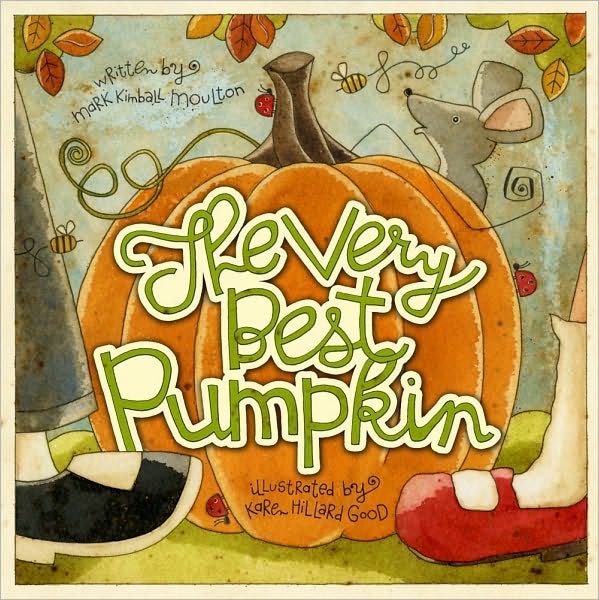
“The Very Best Pumpkin”
By Mark Moulton
Illustrated by Karen Hillard Good
For ages 4 – 8
A gentle story about nurture and friendship, “The Very Best Pumpkin” follows a young boy named Peter as he helps raise pumpkins on his grandparent’s farm. While Peter takes special care of a lone pumpkin, Meg watches from afar. Meg’s family is new to the area so she spends most of her time reading. When October rolls around Peter’s lone pumpkin is ready for picking an d a friendship begins to grow.
Rated: 3 (values, friendship)
What’s good: Good for story times that lead up to preschool field trips.
What’s bad: Meg’s character is a little flat.
“How Many Seeds in a Pumpkin?”
By Margaret McNamara
Illustrated by G. Brian Karas
For ages 3 - 7
The message for this story is, “Good things come in small packages.” Or maybe, “Don’t judge a book by its cover." Either way, it's a good message to teach your children.
Charlie is the smallest child in his class, which means he's usually the last picked for games and sports. But Charlie doesn’t let that stop him from enjoying school. One day Charlie's teacher brings three pumpkins into the class and asks the kids to decide which one has the most seeds. Naturally they guess it is the largest of the pumpkins. After scooping them out and using their math skills they find that some small things have a lot to offer. Rated: 3 (values, math, science)
What’s good: Good use of math and science facts.
What’s bad: Not much that's bad for this age group.
“The Very Best Pumpkin”
By Mark Moulton
Illustrated by Karen Hillard Good
For ages 4 – 8
A gentle story about nurture and friendship, “The Very Best Pumpkin” follows a young boy named Peter as he helps raise pumpkins on his grandparent’s farm. While Peter takes special care of a lone pumpkin, Meg watches from afar. Meg’s family is new to the area so she spends most of her time reading. When October rolls around Peter’s lone pumpkin is ready for picking an d a friendship begins to grow.
Rated: 3 (values, friendship)
What’s good: Good for story times that lead up to preschool field trips.
What’s bad: Meg’s character is a little flat.
“How Many Seeds in a Pumpkin?”
By Margaret McNamara
Illustrated by G. Brian Karas
For ages 3 - 7
The message for this story is, “Good things come in small packages.” Or maybe, “Don’t judge a book by its cover." Either way, it's a good message to teach your children.
Charlie is the smallest child in his class, which means he's usually the last picked for games and sports. But Charlie doesn’t let that stop him from enjoying school. One day Charlie's teacher brings three pumpkins into the class and asks the kids to decide which one has the most seeds. Naturally they guess it is the largest of the pumpkins. After scooping them out and using their math skills they find that some small things have a lot to offer. Rated: 3 (values, math, science)
What’s good: Good use of math and science facts.
What’s bad: Not much that's bad for this age group.
Subscribe to:
Posts (Atom)